 Alina
Alina
Tabaka chicken in a pressure cooker is a modern take on the famous Georgian recipe. The chicken becomes juicy and tender, and the skin gets a golden, crispy crust. The pressure helps it cook evenly, keeping the natural flavors and intense spices. It can be prepared quickly and easily for any occasion. Serve with potatoes, salad, or roasted vegetables.
What makes chicken tabaka special
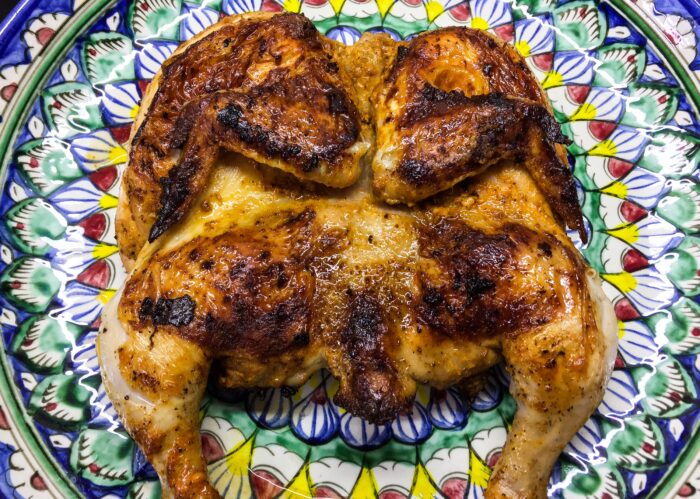
Chicken tabaka is not just another fried chicken recipe, it is a simple technique that changes the texture completely. By flattening the bird and cooking it under weight, you get much more contact between the skin and the hot pan. This contact creates an intense browning and a paper thin crust that you can hardly achieve in the oven. At the same time, the meat inside stays protected by the skin and cooks in its own juices, so it remains tender and flavorful. The marinade with sour cream, garlic and spices adds a gentle tang and aroma without overpowering the natural taste of chicken. This combination of juicy meat and very crispy skin is the main reason why chicken tabaka is so beloved in Georgian and Eastern European kitchens.
What ingredients do we need for a juicy pressure pan chicken
For a really successful pressure pan chicken tabaka, each ingredient has a clear role. The whole chicken should be small to medium so it fits into the pan and cooks evenly from edge to center. Butter gives a rich flavor and deep golden color to the skin, while sour cream in the marinade adds a light acidity and helps tenderize the meat. Garlic, paprika, black pepper and a touch of red pepper build a warm, slightly spicy profile that still feels family friendly. Lemon juice and fresh herbs are added at the end so they stay bright and fresh, lifting the richness of the chicken. Even the small amount of water in the sauce is important, because it helps distribute the lemon and garlic evenly around the meat when you pour it over before serving.
How to flatten the chicken correctly for tabaka
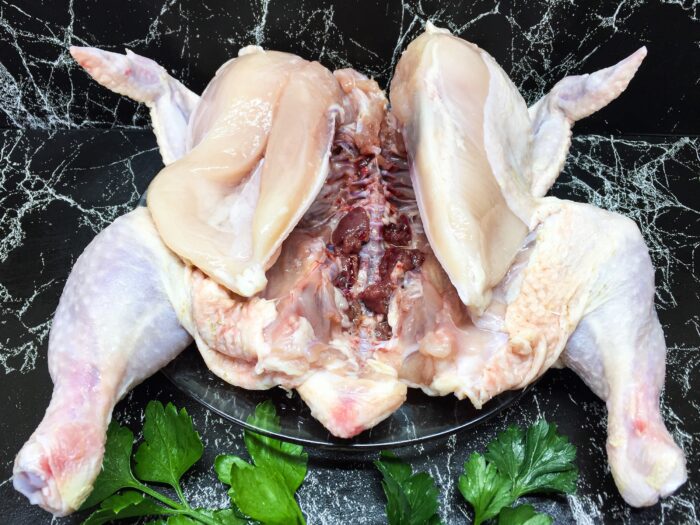
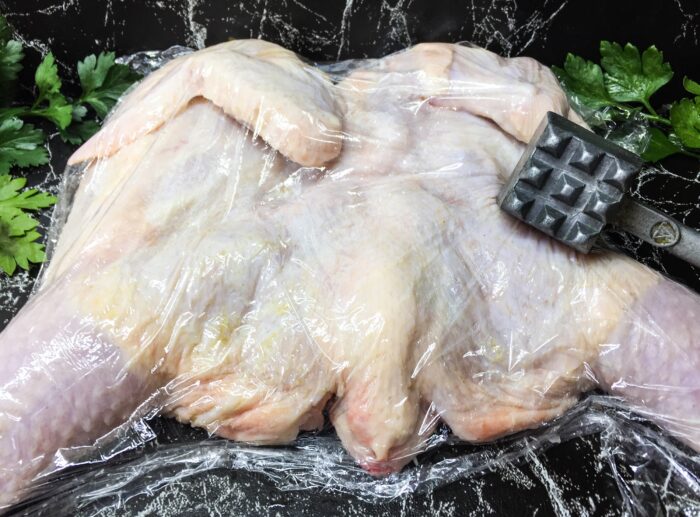
Flattening the chicken is the first key step if you want an even result from a pressure pan. After washing and drying, you cut along the breastbone and open the bird like a book so that it lays flat on the board. Covering it with plastic wrap before using a kitchen mallet protects the skin from tearing and keeps your workspace cleaner. The goal is not to destroy the bones but to gently break some joints and even out the thickness, especially in the breast area. When the chicken is flattened properly, every part touches the pan and receives similar heat, so you avoid undercooked spots near the bone or overcooked edges. This also helps the marinade penetrate more evenly into the meat and under the skin.
How to use the pressure pan or skillet for best results
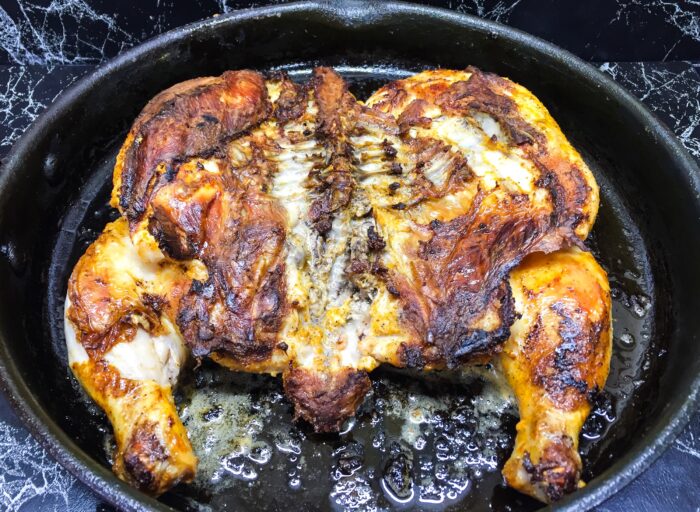
Cooking chicken tabaka in a pressure pan or heavy skillet is all about controlling heat and weight. You start by melting the butter over medium heat so the base of the pan is evenly coated and hot but not smoking. When you place the chicken breast side down, it should sizzle gently, which means the temperature is right for steady browning. The plate and weight on top press the bird against the metal, increasing contact and pushing out some fat, which then helps fry the skin. If the heat is too high, the butter will burn before the meat cooks through, so it is better to stay at medium and adjust slightly as needed. This patient, steady cooking is what gives you a deep golden crust and fully cooked, juicy meat without drying it out.
How long should we cook chicken tabaka
Timing is important for chicken tabaka, but it also depends on the size of the bird and the strength of your stove. In most cases, about 20–25 minutes on the first side is enough to develop a strong crust and cook a good part of the meat. After that, you carefully remove the weight and plate, flip the chicken and cook it for another 20 minutes. You can always check doneness by piercing the thickest part near the bone and watching if the juices run clear. Using a kitchen thermometer makes things easier and safer, because you know the chicken is ready when the internal temperature reaches at least 74°C or 165°F. If you see that the skin is dark but the inside is not ready, simply lower the heat and allow a few extra minutes under a lid.
Why do we prepare a fresh herb and lemon sauce
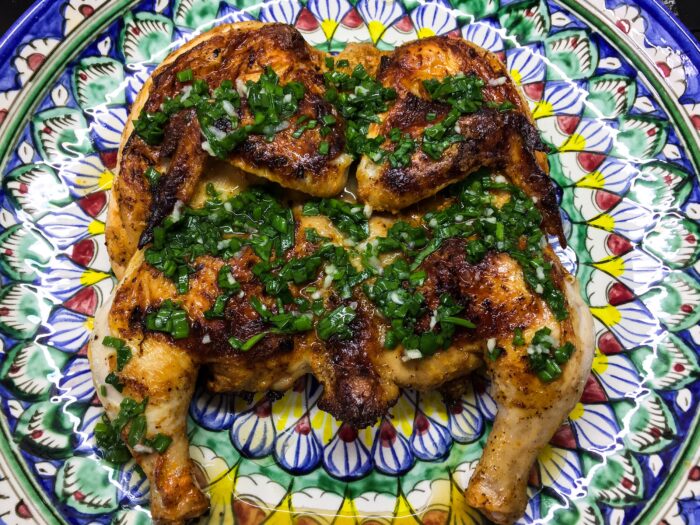
The quick herb and lemon sauce added at the end is a smart way to balance the richness of the fried chicken. Green onion and parsley offer a fresh, slightly sharp note that cuts through the butter and sour cream. Lemon juice brings brightness and a gentle acidity that makes each bite feel lighter, even though the dish is still filling. The small amount of water in the sauce helps spread the flavors evenly over the hot meat when you pour it on top. Because the sauce is not cooked, the herbs keep their color and texture, which looks attractive on the serving platter. This contrast between crispy, golden chicken and a fresh, aromatic sauce is one of the signatures of a really satisfying chicken tabaka.
Common mistakes to avoid with chicken tabaka
Several small mistakes can ruin the texture of chicken tabaka, but they are easy to avoid once you know them. The first is using a chicken that is too large, which makes it hard to flatten and cook evenly in a pan. Another common issue is skipping the drying step: if the skin is wet when it touches the pan, it tends to steam instead of becoming crisp. Too high heat from the beginning can burn the butter and darken the skin long before the meat cooks through, so it is better to start at medium and adjust. Do not forget to season the chicken enough, because under salted meat will taste flat even with a good crust. Finally, cutting the chicken immediately can make the juices run out, so a short resting time is always helpful.
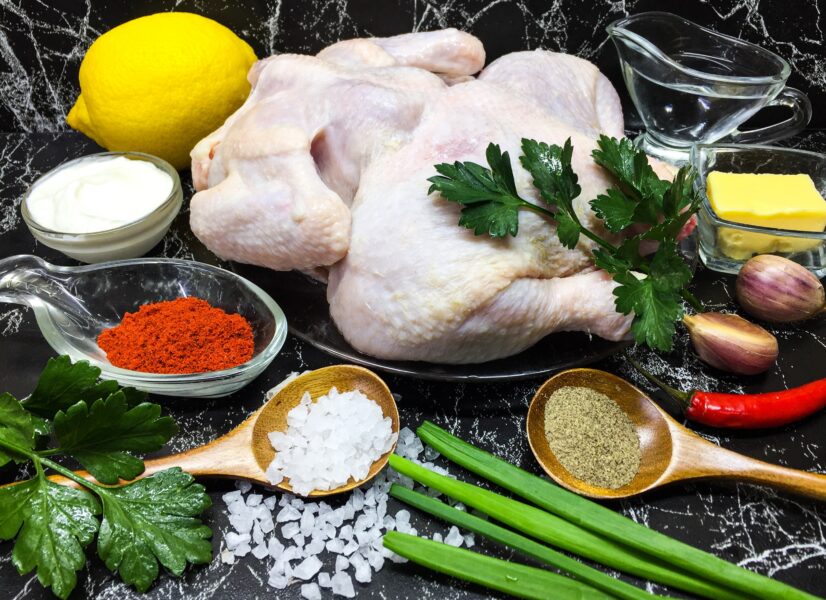
Ingredients
- 1 whole chicken
- 2½ tbsp butter
- 1/3 cup sour cream
- 1 lemon
- 2 cloves garlic
- 2½ tsp salt
- a pinch freshly ground black pepper
- 1½ tsp paprika
- red pepper
- 1/3 cup water
- fresh herbs green onion, parsley
Instructions
- Wash the whole chicken under cold water, pat it dry, then cut it open along the breastbone and remove any excess skin.

- Turn the chicken over, cover it with plastic wrap and use a kitchen mallet to gently pound it flat so it cooks evenly.

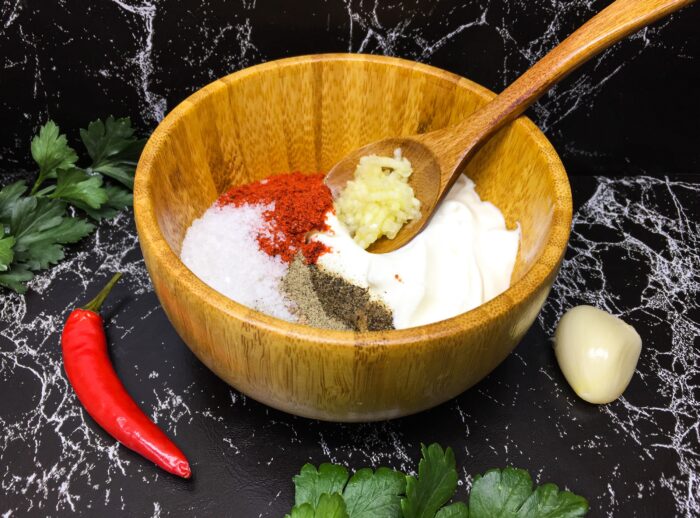
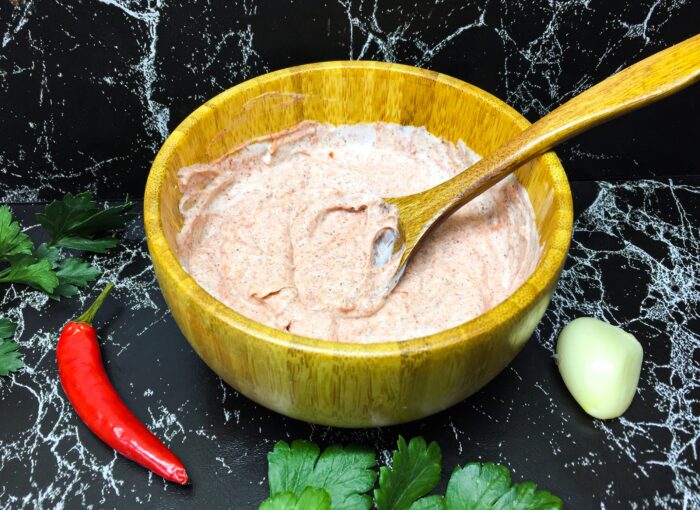
- For the marinade, add freshly ground black pepper, paprika, salt, sour cream, one clove of crushed garlic and red pepper to a deep bowl.

- Stir everything with a spoon until you have a smooth, even mixture that coats the spoon.

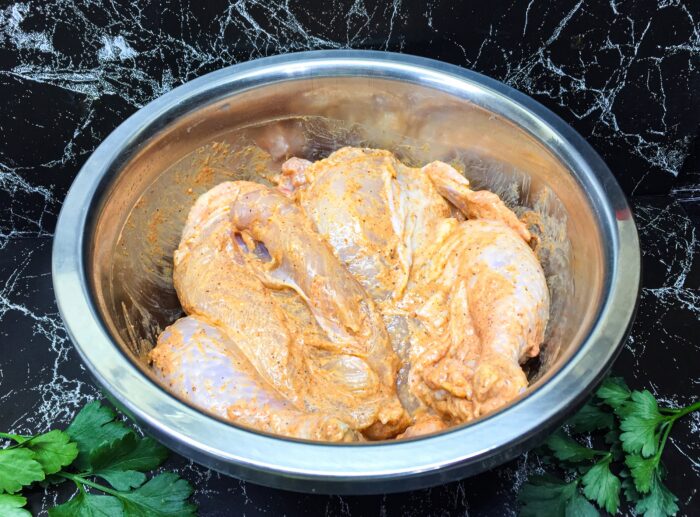
- Rub the chicken generously on all sides with the marinade, place it in a bowl and leave it to marinate for 1.5–2 hours.
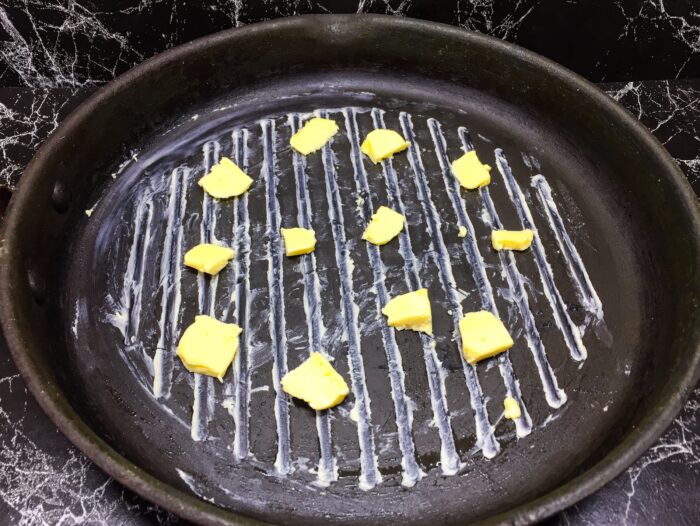
- When the time is almost up, put the pressure pan on the stove and spread the pieces of butter over the bottom so they melt and cover the surface.

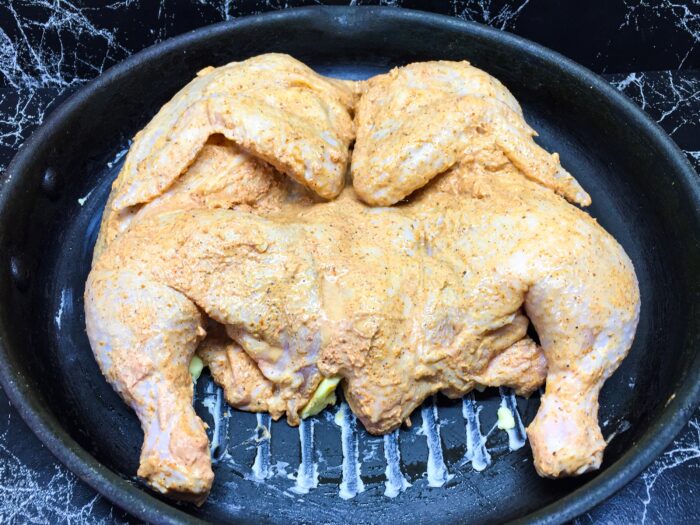
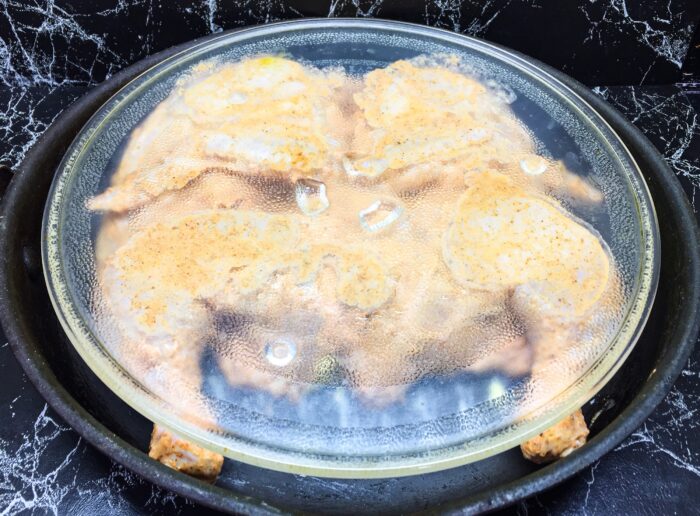
- Place the chicken in the hot pan breast side down, arranging it as flat and compact as possible.
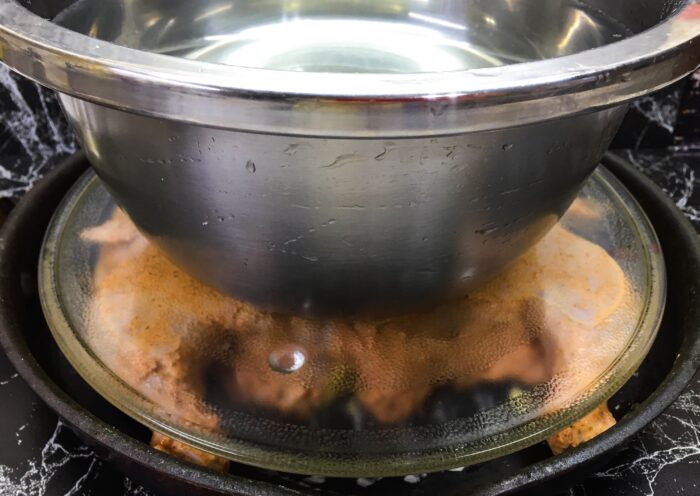
- Cover the chicken with a thick plate or another heat resistant dish that fits inside the pan.

- Put a heavy weight on top of the plate, such as a pot filled with water, and fry over medium heat for 20–25 minutes.

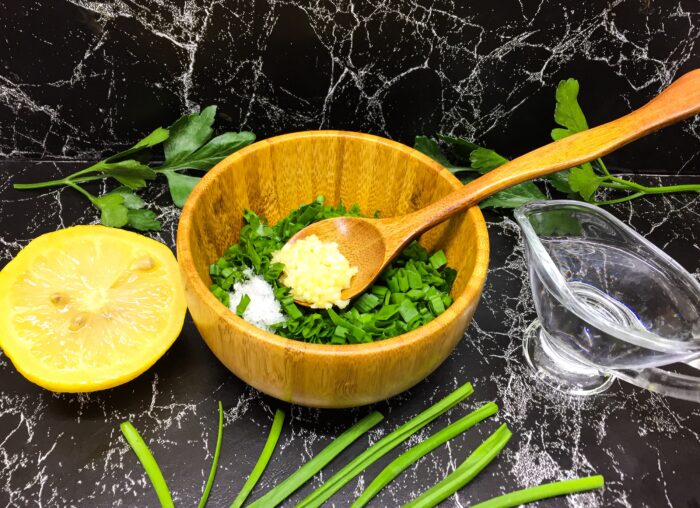
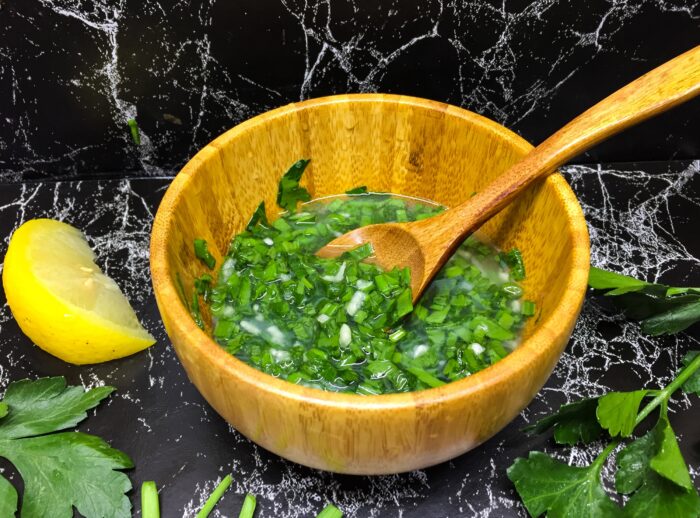
- While the chicken cooks, prepare the sauce: finely chop the green onion and parsley into a bowl, pour in the water and lemon juice, then add the remaining chopped garlic.

- Stir with a wooden spoon until the herbs, garlic and liquid are well combined and the sauce looks uniform.
- When the skin side is nicely browned, carefully remove the weight and plate, turn the chicken over and cook for another 20 minutes until the other side is also golden.

- Transfer the cooked chicken to a large serving platter, keeping it in one piece if possible.

- Spoon the fresh herb and lemon sauce over the hot chicken tabaka and serve it as a main dish for lunch or holidays, with potatoes, another side dish, cooked vegetables or a simple salad.
Notes
- For best results, choose a small to medium chicken so it fits comfortably in the pan and cooks evenly under the weight.
- Do not skip drying the chicken with paper towels before marinating, otherwise moisture will prevent the skin from browning and crisping properly.
- Adjust the heat during cooking: if the butter starts to burn or the skin darkens too fast, lower the heat slightly and continue gently.
- Let the chicken rest for 5–10 minutes after cooking before cutting it, so the juices redistribute and the meat stays moist.
- If you want a lighter version, you can replace part of the butter with a neutral oil, but keep at least some butter for flavor and color.
Nutrition
Nutrition information is automatically calculated, so should only be used as an approximation.
